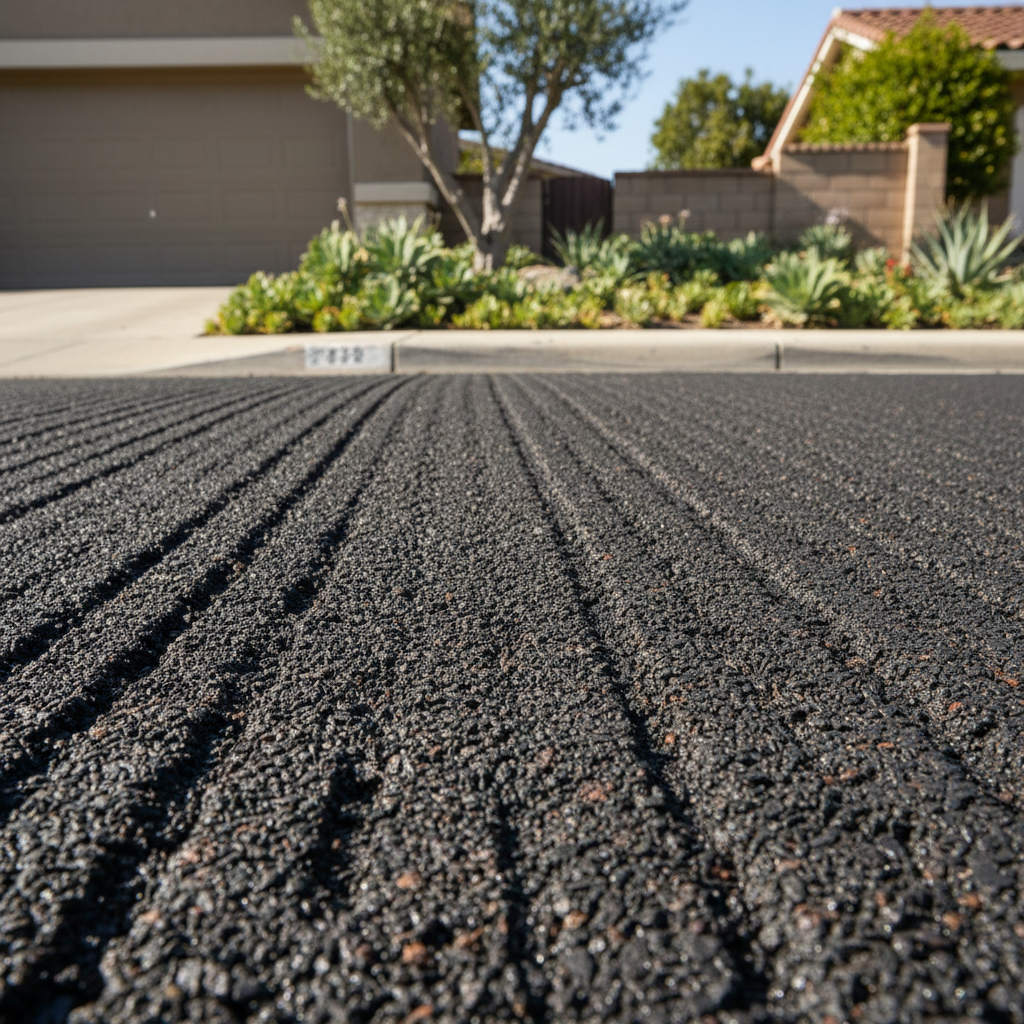
Alright, let's talk about asphalt milling. You’ve probably seen those massive machines munching up old pavement on the freeways or commercial lots right here in Costa Mesa. Maybe you’ve even wondered if it’s something you could do for your own driveway. It’s a fair question, and as someone who’s been in this business a good long while at Sunrise Paving, I can tell you it’s not as simple as it looks. But understanding it? That can save you a whole lot of headache and money.
So, What Exactly Is Asphalt Milling?
Simply put, asphalt milling is when we take off the top layer of your existing asphalt. Think of it kind of like a giant planer smoothing out your driveway. A special machine grinds down the old, worn-out asphalt to a certain depth – usually somewhere between 1.5 and 4 inches. What’s left behind is a rough, textured surface, perfectly prepped for a fresh layer of asphalt.
Why do we bother with this instead of just paving right over the old stuff? Well, there are a few big reasons:
- It keeps your driveway from getting too high. That can cause real trouble with drainage, curbs, and even your garage entrance.
- It gets rid of surface cracks and other imperfections in the old layer. This stops them from popping back up through your new pavement.
- It helps the new asphalt layer stick better, making it last a lot longer.
- And here’s a neat bonus: the material we remove, called 'millings,' can often be recycled and used again. That's good for your wallet, and good for the environment too.
Before You Start: What You Need to Know
Before you even begin to think about milling, you really need to check out your driveway’s condition. Is it just some surface cracks and minor rutting? Or are we talking about deep, widespread cracks, serious rutting, or even foundation issues where the ground underneath is shifting? If it’s the latter, milling probably won’t cut it, and you might be looking at a full removal and replacement. That’s definitely a conversation for a pro, no doubt about it.
You also need to consider drainage. Costa Mesa gets its fair share of rain, especially during the winter months — February, for example, is often the wettest. You certainly don’t want water pooling up against your house or in any low spots. Milling can actually help restore proper grading and drainage, but it absolutely has to be planned correctly.
During the Project: DIY or Call a Pro?
Okay, so you’ve checked out your driveway. Now for the big question: can you mill it yourself?
Let me be totally straight with you: asphalt milling is NOT a typical DIY project for a homeowner. I’ve seen folks try to tackle big paving jobs themselves, and honestly, it rarely ends well. Here’s why:
- Equipment: Milling machines are huge, specialized pieces of equipment. You can’t just rent one from the local hardware store, believe me. They need skilled operators and are built for large-scale work.
- Precision: Getting the depth just right and making sure the surface is uniform is super important. If you mill unevenly, your new asphalt layer will be uneven too, which just leads to more problems down the road.
- Logistics: What are you going to do with all those millings? A professional crew has the trucks and the connections to haul away and recycle the material. Otherwise, you’d be stuck with a massive pile of asphalt chunks.
- Compaction: After milling, the surface needs to be cleaned, often swept. Then, when the new asphalt goes down, it needs to be properly compacted with heavy rollers to make it durable. DIY compaction just doesn't measure up to what commercial-grade equipment can do.
So, what can you realistically do yourself? Not the milling itself, that’s for sure. But you can definitely get the area ready. Clear away any debris, trim back bushes that might be in the way, and mark out any sprinkler heads or utility access points. You can also learn about the process so you know what to expect when a crew is working on your property.
When should you call a pro? Always, for milling. If your driveway is showing serious signs of wear and you’re thinking about a new asphalt overlay, milling is often the best first step. A professional paving contractor like Sunrise Paving has the right equipment, the experienced crew, and the know-how to get the job done right – safely and efficiently. We’ll look at your specific situation, suggest the right depth, and handle all the details, from milling to laying down that fresh new asphalt.
After the Project: What Comes Next
Once the milling is finished and the new asphalt is laid, you’ll have a smooth, durable surface. But your job isn’t quite over yet. New asphalt, even after milling, needs a little TLC to last its full lifespan, which can be 20-25 years in our Costa Mesa climate with proper maintenance.
Here’s what you should do:
- Stay Off It: Give the new asphalt time to cure. Your contractor will tell you exactly how long, but generally, try to avoid driving or parking heavy vehicles on it for a few days.
- Sealcoating: I always recommend sealcoating your new asphalt 6-12 months after it’s installed, and then every 3-5 years after that. It’s like sunscreen for your driveway, protecting it from UV rays, water, and oil spills.
- Minor Repairs: Keep an eye out for any small cracks that might pop up over time. Fix them quickly with an asphalt crack filler to stop water from getting underneath and causing bigger problems.
Milling might sound like a big undertaking, but it’s a really important step for getting a long-lasting, beautiful asphalt driveway. Don’t try to do the heavy lifting here yourself. Trust me, you’ll be much happier with the results and how long your investment lasts if you bring in the experts for this kind of work.