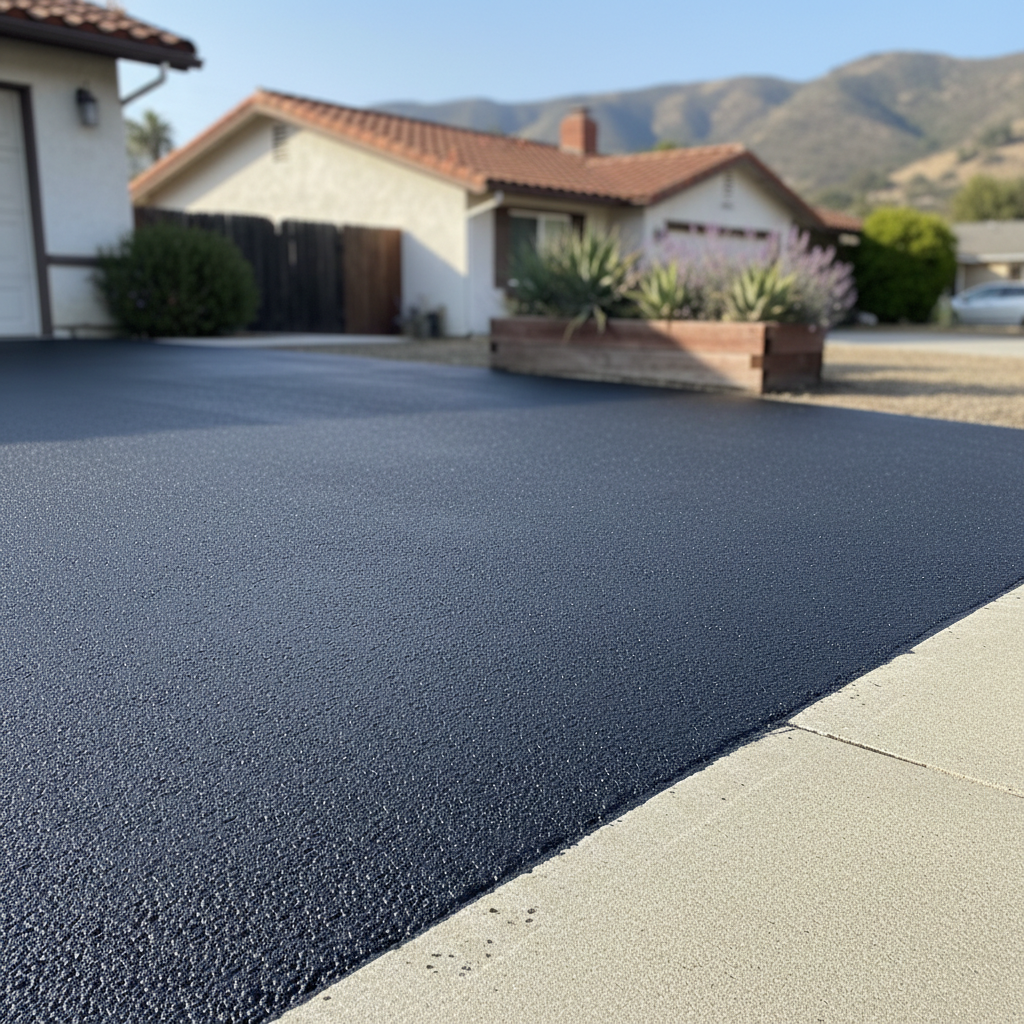
Alright, let's talk slurry coating. You've seen it, right? That fresh, black topcoat that makes an old driveway look brand new. A lot of homeowners around Costa Mesa, especially in places like the Mesa Verde neighborhood where you've got older asphalt, think it's a simple weekend warrior job. And sometimes, it can be. But you gotta know what you're getting into, and more importantly, when to step back and let someone else handle it.
Before You Start: Prep is Everything
Seriously, this isn't a job where you can cut corners on prep. If you do, that slurry won't stick, or it'll peel up in a few months, and you'll have wasted your time and money. First thing's first: clean that driveway. And I mean really clean it. Get rid of all the dirt, leaves, oil spots, and loose gravel. A good power wash is usually the best way to go. Let it dry completely – and I mean bone dry. If there's any moisture, the slurry won't bond right.
Next, you've got to fix any cracks. Small, hairline cracks? You can probably fill those yourself with a good quality crack filler. You can find these at most hardware stores. Follow the directions on the product; they're all a little different, aren't they? For bigger cracks, anything wider than, say, a quarter-inch, or if you've got potholes or areas that are crumbling, stop right there. That's not a DIY slurry job anymore. Slurry isn't a structural repair; it's just a protective layer. Trying to slurry over major damage is like putting a fresh coat of paint on a rotten piece of wood – it'll look okay for a minute, but the problem's still there underneath, and it'll only get worse.
During the Job: Application Tips (and Warnings)
Okay, so you've prepped, you've got your slurry mix, and the weather's cooperating (no rain for at least 24-48 hours, and ideally, not too hot or too cold – 60-85 degrees Fahrenheit is usually the sweet spot). Mix the slurry according to the manufacturer's instructions. Don't eyeball it, seriously. Too thick, and it won't spread right; too thin, and it won't give you the protection you need. You'll need a good squeegee or a specialized applicator brush. Work in small sections, applying a thin, even coat. Don't glob it on. You're aiming for consistency here.
Here's where a lot of folks get into trouble: they try to do it all at once. If your driveway is big, you're going to be rushed, and you'll end up with uneven spots, lap marks, and areas that dry too fast. It's better to work in sections, or even better, if it's a large driveway, consider doing it in two coats, letting the first one cure completely before applying the second. And remember, you're not just painting a wall. This stuff is heavy, and it takes some muscle to spread evenly.
After It's Done: Curing and Care
Once you've got it all down, you've got to let it cure. This is critical. Stay off it completely for at least 24-48 hours, and sometimes longer depending on the product and the humidity. Don't drive on it, don't walk on it with heavy shoes, don't let your kids ride bikes on it. If you rush this, you'll leave tire marks, footprints, or even pull up the fresh slurry. It's a real bummer to see all that hard work ruined because you couldn't wait another day.
Even after it's cured enough to drive on, be gentle for the first week or so. Avoid sharp turns with your car, especially if you're turning the wheel while stationary. That's a surefire way to scuff up a fresh slurry coat. You'll want to reapply slurry every 2-5 years, depending on traffic and how well you maintained it. Regular cleaning and quick attention to any new cracks will help extend its life.
When to Call Sunrise Paving (or another pro)
So, when is it time to hang up the squeegee and call a professional? If your driveway has extensive cracking, alligatoring (that pattern that looks like alligator skin), significant potholes, or areas where the asphalt is really breaking down, you're beyond a DIY slurry job. Those issues need proper asphalt repair first, and that often involves cutting out sections, laying new asphalt, or even a complete resurface. Trying to just slurry over that is a waste of money and won't solve the underlying problem.
Also, if you've got a really steep driveway, or one that's unusually large, it's probably best left to the pros. We've got the right equipment, the experience to apply it evenly and quickly, and we can handle the heavy lifting. We also know how to deal with specific Costa Mesa conditions, like how the coastal humidity can affect curing times. Sometimes, saving a few bucks upfront ends up costing you more in the long run if the job isn't done right. Don't be afraid to ask for help when you need it. It's your home, and you want it done right.